

When the Budget Says Yes but the Cash Says Not Yet
Imagine a congregation preparing to launch a tutoring ministry in the fall. The board approved the program during the annual budget process. Volunteers are interested, ministry leaders have begun planning, and projected giving for the year is sufficient to cover the expense. Then the treasurer points to a problem no one noticed when the budget
When Calling Exceeds Capacity
Imagine a congregation where the youth ministry conversation begins with arithmetic. There are six teenagers in the congregation, three of them attending regularly. Two adults care deeply about youth formation, but neither can take responsibility for another weekly program. The pastor can help occasionally, though the rest of the church calendar is already full. Around
How a Board Learns to Govern Together: The Shared Practices That Form a Governing Body
A board can conduct an orderly meeting and still struggle to govern together. The agenda moves on time. Reports are received. A motion is made, discussion follows, and the vote is recorded. Yet two members never read the material sent earlier in the week. Someone with serious reservations decides not to speak. Another member responds
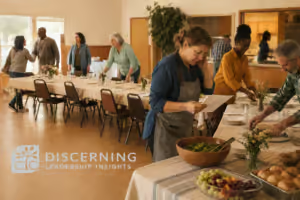
Reading the Congregation’s Rhythms: What Growth, Witness, Sustainability, Clarity, and Discernment Reveal About Church Life
The congregation’s community meal had become one of its most visible ministries. Attendance had increased steadily. Neighbors who rarely entered the sanctuary came through the fellowship hall each week, volunteers formed new relationships, and local organizations began referring people to the church. Leaders understandably saw the ministry as evidence of Growth and Witness. They began
The Questions a Church Asks Shape the Future It Can Imagine
The governing body had spent nearly an hour discussing deferred maintenance. The education building needed a new air-conditioning unit, but only one classroom was currently being used. The church also needed exterior painting, new tile in the fellowship hall, and perhaps a replacement for the aging refrigerator whose door no longer stayed closed reliably. Financial

What Daoist Formation Contributes to My Christian Work
A recent conversation about leadership and conflict turned toward a question I have learned to expect. Most of my public work is with churches, pastors, governing bodies, and ministry leaders. I write and teach in Christian language. I speak about God, Christ, the Holy Spirit, Scripture, Calling, stewardship, and the responsibilities of communal life. How,

The Theology That Shapes My Work with Churches: Calling, Discernment, Governance, and the Continuing Walk with God
My work has taken form through subjects that churches often keep in separate rooms. Calling is treated as spiritual language. Governance belongs to boards. Money belongs to finance committees. Leadership formation belongs to pastors and training programs. Stewardship, discernment, authority, institutional responsibility, and congregational change are often discussed as though each were its own field.
When a Pastor Misreads the Church: How communal discernment can correct an incomplete first reading
The pastor had grown increasingly frustrated with the governing board. Meetings wandered. Decisions that seemed settled returned the following month. Assignments remained unfinished, and simple questions consumed more time than they should have. The explanation appeared obvious: the church lacked clarity and accountability. With the chairperson’s support, the pastor tightened the agenda, standardized reports, assigned

A Financial Report Can Be Accurate and Still Hide the Truth
The treasurer reaches the final page of the monthly report and pauses over the bottom line. Income is slightly ahead of expenses, and the church has a substantial balance in the bank. After several difficult months, the board members look relieved. Later in the meeting, the pastor returns to a ministry proposal that had been
When Availability Becomes the Qualification
The nominating committee had been meeting for nearly two hours. Most of the slate was complete, but one important role remained open. The annual meeting was approaching, the bylaws required the position to be filled, and everyone was tired. Several names had already been dismissed. One person was too busy. Another might ask more questions

Listening for God in a Culture of Self-Optimization
For one year, I organized my work through Tony Robbins’s RPM model. I appreciated its insistence that activity should serve a larger purpose. It helped me identify the results I wanted, connect them to reasons that mattered, and turn intention into action. The structure brought order to work that might otherwise have scattered across too

The Mission Keeper: Protecting Discernment in Church Leadership
The proposal appeared on the agenda as a building-use request. A community childcare organization needed several classrooms during the week. The church had space. The arrangement could bring in needed income, connect the congregation with neighborhood families, and put rooms that sat empty most weekdays back into service. The questions came fast. Who would unlock

When Churches Need More Than an Apology
The congregational meeting had been called to acknowledge what had happened. For months, members had heard fragments. A staff member had resigned. Several volunteers had stepped away. Questions circulated about how concerns had been handled and why the governing board had waited so long to respond. By the time the meeting began, most people knew
Who Interprets What the Church Hears
The fellowship hall had been arranged for listening. Round tables replaced the usual rows. Sheets of paper covered the walls, each headed with a question about the congregation’s future. Where is life growing? What is becoming difficult to sustain? What might God be asking of us now? People spoke with more honesty than the planning

When Church Process Protects Power
The board member had become difficult. That was the phrase leaders had begun using. They asked for the treasurer’s report before a major vote. They wanted to know why a staffing proposal had been discussed by a small group and then brought to the board as though the direction had already been settled. When a

Before You Trust the Process
The pastor received the call late in the afternoon. A concern had been raised. A formal review would begin. The people responsible for the process would be in touch soon. The pastor asked what the concern involved, who would oversee the review, how long it might take, and what the congregation would be told. The

Leadership That Helps a Church Listen
A church board was discussing whether to continue a ministry that had been part of the congregation for many years. The program still appeared in the budget. Volunteers were still recruited. Announcements were still made. Yet participation had declined, the same few people carried most of the work, and no one could say with confidence

The Church Becomes What It Practices
Several years ago, while serving as Executive Associate Conference Minister, I met with a church leadership team that was trying to imagine whether the congregation could continue. The church had once been large. By the time we gathered, worship attendance had settled around fifty or sixty people. The leaders were new in their roles, and

Making Leadership Participation Sacred Again
I was recently working with a church leadership group when a familiar concern surfaced: they were having trouble getting people to participate. People were reluctant to join committees. Some who agreed to serve did not show up consistently. Some came to meetings but did not say much. Others seemed unsure what the group actually needed

When Church Structures Forget Why
A new moderator opens the folder left by the previous moderator. It may be a binder pulled from a cabinet in the church office, with meeting minutes clipped in order and a few sticky notes curling at the edges. It may be a shared drive with file names that made sense to someone two years

The Theology Hidden in Church Governance
A church speaks theology in many visible ways. It sings, prays, preaches, gathers at the table, welcomes children, blesses the grieving, receives offerings, confesses faith, and sends people back into the world with words of peace. In those moments, the church says something about God, grace, justice, mercy, belonging, and the life it believes it

When Our Story No Longer Fits
A church learns certain words for itself. Welcoming. Inclusive. “Open and Affirming.” Mission-minded. Justice-seeking. Community-centered. Connectional. A place where “all are welcome.” A congregation committed to “Beloved Community.” A “Matthew 25” church. A church trying to live with dignity, reconciliation, compassion, and peace. Some of these words are earned over years of prayer, courage, conflict,

When the Church is Busy but not Listening
A church can be very good at getting things done. The newsletter goes out. The bills are paid. The calendar is maintained. Worship volunteers receive their reminders. The building is unlocked, cleaned, repaired, and used. The same dependable people keep showing up, carrying what needs to be carried, answering the questions that need answers, filling

Keeping Discernment Alive After the Vote
In many churches, accountability is avoided for reasons that sound caring. People do not want to embarrass anyone. They do not want a pastor or volunteer to feel questioned in public. They do not want a meeting to become tense when everyone is already tired. Most of the time, the instinct is care. Churches value

The Sound of A Listening Church
There are meetings where everyone speaks, and still the room never really listens. The words move quickly enough. Reports are given. Motions are made. Concerns are named carefully, sometimes so carefully that no one can tell whether a real concern has actually been named. Someone asks a question that is carrying more resistance than curiosity.

What Discernment Looks Like in Church Governance
A church can pray before every meeting and still organize the meeting in ways that make listening difficult. The prayer may be sincere. The people may care deeply. The leaders may want to be faithful. Yet by the time the agenda begins, the room may already know what is expected of it. Reports will be

The Feel of a Listening Church
There is a moment in some church meetings when the room seems to loosen. No one has solved the problem yet. The budget is still tight. The conflict has not disappeared. The staff are still tired. The building still needs attention. The congregation is still carrying grief, hope, history, preference, and fatigue into the room.

Why Discernment Needs Structural Protection
Churches have become efficient at making decisions. They approve budgets, adjust programs, revise policies, authorize repairs, evaluate staffing, adopt strategic plans, and respond to the steady stream of institutional needs that arrive before every governing body. Much of this work is necessary. Some of it is faithful. A church cannot live responsibly without making decisions.

When Systems Reward Silence
Three board members gather in the parking lot after the meeting. The vote had been nearly unanimous, and the discussion itself had been brief. Inside the room, the decision appeared settled. Outside, however, the conversation was only beginning. One board member wonders whether the congregation actually has enough volunteers to support the new initiative. Another

The Relationship Between Authority and Attentiveness
The agenda had already been distributed. Supporting documents had been emailed several days earlier. Committee recommendations were written clearly. The motion itself appeared straightforward enough that several people had already formed opinions before the meeting began. Most of the discussion unfolded exactly as expected. Questions were answered. Clarifications were offered. Heads nodded around the room.

When Financial Anxiety Starts Governing the Church
The finance report was not dramatic. Giving was flat. Not collapsing. Not in free fall. The line on the chart had simply stopped rising. A few months looked softer than expected. Expenses were higher than they had been the year before. Insurance had increased. Utilities had crept up. A repair that could no longer be
What Governance Systems Teach People About God
A comment was made at the Congregational Meeting and then, somehow, the room moved on. It was not a small comment. Someone said the church was operating in a deficit. If the deficit continued at its current level, the church had about five more years of funds remaining. There are statements that do not need
Governance Is a Spiritual Practice
The report arrived at 6:42 for a meeting that began at 7:00. No one had done anything malicious. The committee chair had been traveling. The staff member who helped gather the information had been out sick. A few numbers needed to be checked before the report could be sent. By the time it reached the
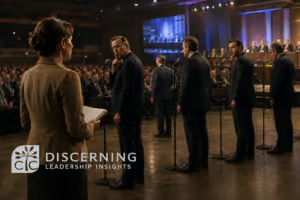
When Governance Decides Who Can Be Called; What the Southern Baptist Convention Vote Reveals About Structure, Discernment, and the Voices Churches Train Themselves Not to Hear
A vote can look clean from a distance. The motion is introduced. The language is read. Messengers rise to microphones. Someone speaks for it. Someone speaks against it. The chair recognizes the next person in line. There are rules for the order of business, rules for debate, rules for amendment, rules for what happens next.

What Church Meetings Are Forming in Us
The meeting did not feel important enough to remember. There was an opening prayer, a financial report, a few ministry updates, and a discussion about whether to postpone a decision until next month. Someone asked a question about volunteers. Someone else wondered whether the budget line was accurate. The chair looked at the clock more

When Anxiety Takes power in the Church
The first time the phrase came up, it did not feel like a theory. It came from a board chair trying to describe what was happening in a church meeting where one person seemed able to change the whole atmosphere. The agenda would be moving along. A recommendation would be on the table. People would

The Theology Hidden in Church Structure
By the time the board received the report, the partnership already had momentum. The ministry committee had been exploring a relationship with a local organization. At first, the fit seemed promising. The organization had visibility in the community. It had programs that touched people the church cared about. Its language sounded close enough to the

The Emotional Climate Beneath Church Decisions
You are new enough to the board that you still bring the whole packet printed and clipped together. You have read the reports twice. You marked one sentence in the financial update because it seemed more careful than clear. You circled a phrase in the outreach committee’s proposal because the partnership sounds promising, but the

When Grief Enters the Room
The report was short enough to pass without much discussion. A committee had submitted its usual update. The weekday Bible study was still meeting. Attendance was lower than it had been. The same three people were carrying most of the preparation. The report used careful language, the kind churches often use when no one wants

The Pace of Faithful Listening
There is a moment in many church meetings when the desire to decide begins to feel like responsibility. The conversation has gone on long enough. The agenda is waiting. People have shared the concerns they were ready to share in that setting. Someone reminds the group that the committee needs direction, the calendar is moving,

The Spiritual Cost of Untaught Polity
A church can know something is wrong and still not know what to do. That may be one of the more painful realities in congregational life. People can sense that authority has shifted in unhealthy ways. They can see meetings being controlled, voices being dismissed, decisions being rushed, processes being ignored, and relationships being strained
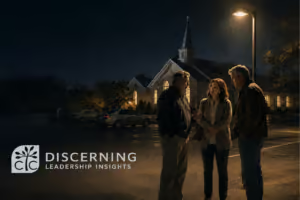
What Trust Feels Like in Healthy Governance
Trust is often noticed by where truth goes after the meeting. Over time, I have come to listen not only to what is said during a meeting, but to where the truth seems to go afterward. When important concerns keep moving into hallways, parking lots, and private calls, the issue is rarely only communication. Often

The Difference Between Consensus and Discernment
There are moments in church meetings when agreement arrives with a kind of mercy. The room has been carrying something heavy. A budget question has opened more concern than expected. A building conversation has touched grief the congregation rarely names directly. A ministry that once carried deep life now depends on volunteers who are tired,

Mature Discernment in Practice
There are church meetings where nothing especially dramatic happens, and yet the room feels different. The agenda still looks familiar. There are minutes to approve, reports to receive, financial realities to review, ministry questions to carry, and some unfinished matter from the previous month that has returned with more weight than anyone expected. People arrive
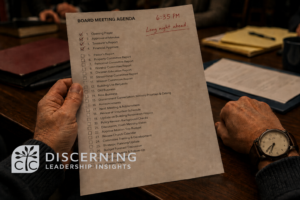
Discernment Cannot Survive Chronic Exhaustion
We have all been in a meeting that runs too long. The agenda was planned to fit within the expected timeframe, and everyone arrived assuming the group would move through the work with reasonable care. Then one item needed more attention than expected. A financial concern raised questions no one had prepared to answer. A
What Institutional Anxiety Sounds Like in Church Meetings
The finance report has been received, but the room has not settled. The treasurer has explained that giving is behind budget for the third month in a row, and the shortfall is large enough that leaders can no longer treat it as seasonal variation. The numbers are clear on the page. Revenue is down, a

The Cost of Performative Harmony
The board has settled into the usual rhythm of its monthly meeting. Reports have been received, a few updates have been offered, and the chair is preparing to move to the next agenda item when one of the leaders pauses and says there is something the group needs to notice. A recent interaction, they explain,

The Spiritual Tradeoffs of Institutional Stability
You sit with your fellow church leaders around a familiar table. The agenda unfolds much as it always does. The financial report is presented without any significant concern. Committee chairs offer updates on their work. Someone provides an update on the building. Another reports on an upcoming event. The moderator guides the group carefully from

When Churches Forget They Are Also Employers
Most churches do not think of themselves primarily as workplaces. They think of themselves as spiritual communities, covenant relationships, ministries, and families of faith. In many ways, that instinct is understandable and deeply important. Churches often resist thinking of themselves as organizations. Yet every church functions through systems of authority, employment, accountability, communication, and governance

How Urgency Shapes What a Church Can Hear
The meeting was supposed to end at 8:00, but by 9:15 several people were still flipping through packets they had not fully read. Half-finished coffee cups sat beside laptops, handwritten notes, and budget reports marked with sticky tabs. The agenda had seemed manageable when it was first emailed earlier in the week, but as the
Why Discernment Rarely Feels Certain
“I just wish we had more clarity.” The sentence settled quietly into the room, and several people nodded in agreement. The governing board had spent most of the evening discussing staffing concerns, financial pressure, and the growing realization that some long-standing patterns in the congregation could not continue indefinitely. No one had raised their voice.

Listening Requires More Than Silence
Earlier this year, I spent a day with a group of church leaders working together on a covenant for how they hoped to relate to one another moving forward. The atmosphere in the room was hopeful, though beneath the conversations lived tensions that had clearly been accumulating for some time. Like many leadership groups, they

What Churches Learn to Avoid
Most churches do not consciously decide what may or may not be spoken aloud. The process develops gradually, through repetition, atmosphere, and emotional memory. A difficult conversation leaves tension lingering in the room long after the meeting ends. Someone raises a concern and notices how quickly the discussion shifts toward logistics. A pastor drives home

The Emotional Cost of Speaking Honestly
Imagine yourself sitting in the usual church board meeting. The agenda is moving forward smoothly. The conversation feels constructive. People are discussing a new direction the board is considering. Heads nod gently around the table. The momentum of the conversation slowly begins carrying the room toward agreement. Yet inside, you feel tension. Something about the

The Weight Pastors Carry in Undeveloped Governance Systems
In many churches, the pastor becomes the person responsible for holding the spiritual center of the community together. This responsibility is rarely stated directly. It emerges slowly through the life of the congregation. The pastor notices the tension rising in the board meeting and gently reframes the conversation. The pastor senses when fear is shaping

What Calmness Sometimes Conceals in Church Board Meetings
There are moments in church leadership when a room becomes very quiet after someone speaks. A treasurer names the pace of financial decline more plainly than usual. A pastor admits exhaustion. A board member asks whether a long-held ministry still carries life within it. Someone wonders aloud whether the congregation has confused activity with calling.

When Governance Shapes What the Church Hears
Most churches assume their governance structures are neutral. We inherit bylaws, committees, voting procedures, and reporting lines, and we tend to view them as administrative necessities rather than spiritual influences. Yet over time I have come to believe that governance quietly shapes what a church is able to hear. Structure does not simply organize decision-making;

Who Holds the Board Accountable?
In most congregational systems, ministers serve within defined accountability structures. They hold credentials. They agree to ethical standards. If concerns arise, there are pathways for review. Regional committees can examine conduct. Standing can be suspended or withdrawn. Boards operate in a different category. Elders, trustees, deacons, and council members often hold final authority in the

Why Congregational Polity Struggles with Boundaries
When I was serving in judicatory leadership, I began to notice something about boundary awareness training. The curriculum focused heavily on sexual ethics. That emphasis made sense. It emerged from real harm, real investigations, and the recognition that abuse had to be addressed directly. Yet over time, it became clear that many other ethical boundaries
When Financial Anxiety Quietly Reshapes Ministry
Financial anxiety in ministry rarely arrives as crisis. It builds gradually through modest budget shortfalls, cautious salary adjustments, and conversations that end with the phrase “we’ll need to wait another year.” Nothing appears dramatic in isolation. Over time, however, the accumulation begins to influence how pastors think about their future, their families, and the congregations
When Pastors Are Expected to Lead But Not Recognized as Leaders
In many congregations, the expectations placed on pastors have shifted quietly over the past decade. Words like strategy, alignment, governance, sustainability, and organizational clarity are used with increasing frequency in board meetings and denominational conversations. Churches feel the weight of complexity. Cultural volatility, financial pressure, and declining volunteer bases have made leadership feel more urgent.
When the System Matters More Than the Shepherd
No church would ever say this out loud. No board gathers and votes:“Let’s protect the system — even if it costs the pastor.” And yet, it happens. Quietly.Gradually.Unintentionally. The calendar fills.The budget tightens.Attendance fluctuates.Conflict surfaces.Insurance premiums rise.Policies need updating.The building needs repair. And somewhere along the way, preserving the institution becomes urgent. The shepherd becomes

Sustainable Ministry Requires Formed Leaders
Most Churches Are Led by Devoted People Most churches are led by people of sincere devotion. They love their congregation. They care about the mission. They show up consistently. They pray before meetings. They are faithful. And yet, many congregations led by deeply faithful people still experience recurring strain. Meetings feel heavy. The same
When Influence Outpaces Accountability
Influence is not the same as authority. And when influence outpaces accountability, discernment begins to bend. The board gathers to discuss a new ministry initiative. The proposal has been carefully prepared. The pastor has done her work. The committee chair has reviewed the details. The conversation begins thoughtfully. Then one long-serving member clears his throat.
When Balancing the Budget Is the Wrong Choice
Balancing the budget is not the church’s highest calling. Faithfulness is. The finance committee sits around a long table covered in spreadsheets. The numbers are not catastrophic. There is no crisis. But giving has softened slightly. Expenses have risen in predictable ways. The draft budget shows a modest shortfall. The room grows careful. “We need

The Quiet Erosion of Trust at the Leadership Table
Trust rarely collapses in a single moment. It thins. On a Sunday afternoon, just after worship, the board chair is halfway to her car when a fellow board member catches up beside her. “Do you have a minute?” They stand between two rows of vehicles, bulletins still folded in their hands. The conversation begins gently
When Clarity Is Assumed but Never Named
Clarity that is assumed but never named will eventually be replaced by frustration. On a Tuesday evening, the board gathers in the fellowship hall. The agenda is printed. The coffee is poured. The pastor presents a proposal for a new community partnership—thoughtful, prayerfully shaped, modest in scope. Silence follows. The board chair nods slowly and

The Hidden Cost of Constant Urgency in Church Leadership
Most congregations do not believe they are operating in crisis. Yet many are living in urgency. Budget pressures. Attendance fluctuations. Cultural shifts. Staffing transitions. Denominational uncertainty. Facility concerns. Community change. None of these are unusual. All of them require leadership attention. But when pressure becomes constant, something subtle happens. Urgency shifts from being a response
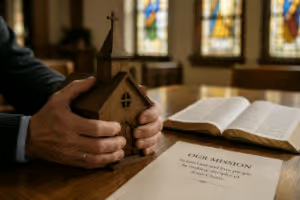
When Boards Confuse Oversight with Ownership
Church boards are entrusted with sacred responsibility. They guard mission.They steward resources.They protect continuity across seasons of leadership.They ensure accountability. Governance in a congregation is spiritual work. But something subtle can happen over time. Oversight can begin to feel like ownership. No one intends this shift. It does not arrive with a vote. It rarely

When Financial Anxiety Shapes Spiritual Direction
Money always speaks in a congregation. It speaks even when it is not on the agenda. It speaks even when no one names it aloud. It speaks in tone, in pacing, in hesitation, in the narrowing or widening of imagination. It speaks in what is postponed and in what is protected. It speaks in the

Pastors Are Leaving — And It Isn’t Just Burnout
Pastors are leaving ministry. Not in waves.Not in dramatic public exits.But in quiet departures. Some step away to nonprofit work. Some take chaplaincy roles. Some leave congregational leadership entirely. Others remain—but with diminished energy, shortened horizons, or an unspoken question about how long they can continue. Recent national research confirms what many congregations are beginning

When Governance Systems Lose Their Soul
Church systems are sacred gifts. Bylaws. Policies. Procedures. Meeting rules. Judicatory oversight. Financial processes. These are designed as guardrails. They exist to protect fairness, ensure accountability, and preserve trust across generations of leadership. They make shared ministry possible. At their best, governance systems serve Calling. But even sacred systems can drift. A policy designed to