
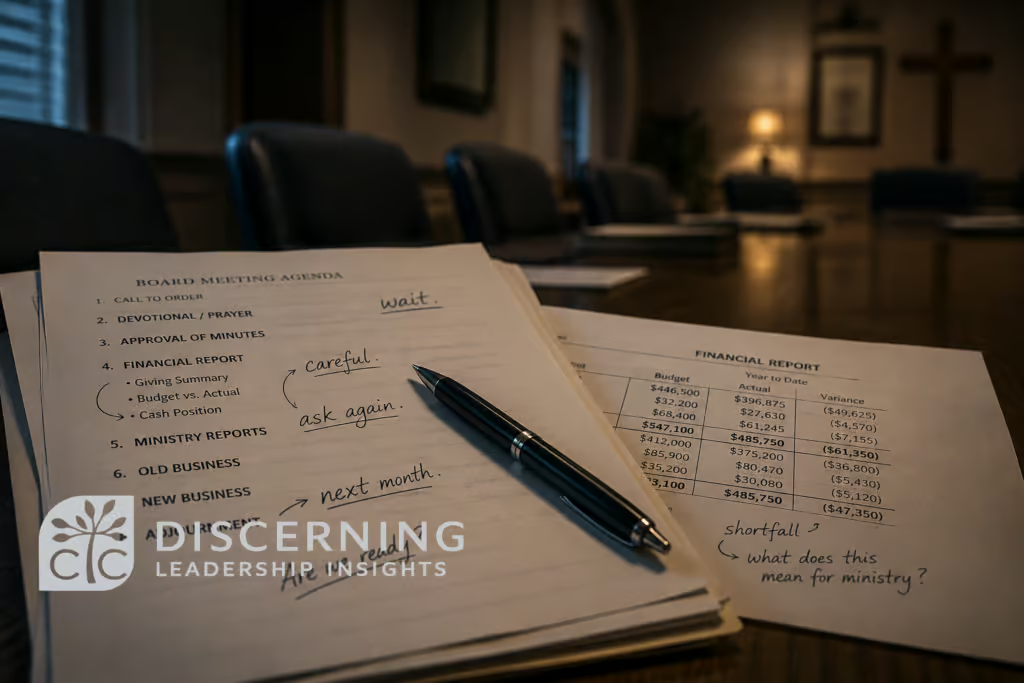
The finance report has been received, but the room has not settled. The treasurer has explained that giving is behind budget for the third month in a row, and the shortfall is large enough that leaders can no longer treat it as seasonal variation. The numbers are clear on the page. Revenue is down, a few pledged gifts have not arrived, and two building expenses landed in the same month. No emergency decision is required that evening, but everyone understands that the conversation has moved beyond ordinary reporting.
Someone asks whether the shortfall is connected to attendance. Another asks whether several larger donors are traveling or whether any pledges were delayed. A trustee wonders whether the building expense can be spread over two months. These are reasonable questions. They belong in the conversation. Then the emotional tone begins to shift. A longtime board member says the church needs to be very careful right now. Someone else says people are already nervous and the congregation cannot handle another difficult announcement. A third person suggests waiting until next month before discussing any adjustments because the timing feels too sensitive. The room is still polite, but the meeting has begun to organize itself around anxiety.
Anxiety speaks through pacing, repetition, caution, and the kinds of questions that begin to dominate the room. It sounds like concern for the congregation’s reaction. It sounds like fear of making the wrong move. It sounds like a strong preference for waiting, even when waiting has already become part of the pattern. It sounds like a group of faithful people trying to protect the church from pain while also sensing that the pain has already entered the room.
Institutional anxiety is the emotional pressure a church carries when something it depends upon feels threatened. Sometimes the threat is financial. Sometimes it is attendance, staffing, trust in leadership, volunteer capacity, denominational change, building maintenance, or the fear that the congregation no longer knows how to be what it once was. This anxiety may be rooted in love. People become anxious because the church matters to them. They have given years of service, memory, money, prayer, and labor to this community. When something feels fragile, they feel it in their bodies before they can name it with clarity.
In church meetings, institutional anxiety often sounds prudent. Someone says the group should move slowly. Someone reminds the council that the congregation has been through a lot. Someone raises concern about how people will interpret the decision. Someone asks whether the board has enough information. Each statement may carry wisdom. Every one of those concerns may deserve attention. Anxiety becomes formative when these concerns begin controlling the conversation before the community has listened deeply enough to understand what faithfulness requires.
A board can spend an hour discussing what people might think without asking what the church has actually been called to do. A council can rehearse previous failures until the memory of those failures becomes stronger than the present question. A committee can ask for more information again and again, even after the essential realities are already clear. A congregation can become so attentive to potential reaction that it loses the ability to attend to Calling. The meeting continues, but the center of gravity has shifted from discernment to emotional protection.
This shift is often subtle because anxiety does not always sound frantic. In many churches, it sounds measured, careful, and responsible. It may be voiced by people with deep institutional memory and sincere love for the congregation. The person urging caution may be the one who helped the church survive a previous crisis. The person resisting a new initiative may remember when a similar effort exhausted the volunteers and damaged trust. The person asking for more time may be carrying grief from a season when leaders moved too quickly and people felt ignored. Anxiety carries history with it, and that history deserves to be heard with respect.
Yet history can begin speaking louder than Calling. A congregation may interpret every new possibility through the pain of the last difficult season. Leaders may hear a proposal for change and immediately remember the conflict from ten years earlier. A question about ministry direction may awaken old fear about money, membership, or pastoral stability. When this happens, the current conversation becomes crowded with earlier wounds. The board may believe it is discussing the agenda item in front of it, while the room is actually responding to unresolved memory.
Governance systems shape whether institutional anxiety is recognized, interpreted, and held with care. An agenda that moves quickly from report to decision gives anxiety very little room to be named. A financial report that presents numbers without narrative may leave board members filling in the emotional meaning for themselves. A chair who responds to anxiety by smoothing it over may calm the room for the moment while leaving the underlying fear intact. A board culture that treats anxious caution as the most responsible voice in the room may slowly train leaders to equate faithfulness with minimizing exposure.
The details matter. When a budget report is presented only as numbers, the room may attach its own story to those numbers. When a staffing concern appears only as a line item, leaders may avoid the human impact behind it. When declining participation is reported without space for interpretation, people may choose either denial or despair because no shared process helps them understand what the decline is revealing. Governance systems do more than organize meetings. They shape how a community metabolizes fear.
Institutional anxiety narrows the field of attention. Leaders begin noticing what could go wrong faster than they notice what may be emerging. They become highly alert to risk, reaction, and loss. They may still pray, listen, and speak about mission, but the practical weight of the conversation begins to fall elsewhere. The room becomes organized around questions of safety: Will this upset people? Will this cost too much? Will this create conflict? Will this make us look unstable? Will this expose what we have been trying to manage quietly?
These questions carry real information. A discerning church does not ignore risk, cost, conflict, or capacity. The problem develops when these questions become the first and strongest voices in the room. Calling then has to compete for attention. Discernment becomes compressed because the board is already emotionally committed to reducing danger before it has fully listened for direction. The congregation’s nervous system begins making theological decisions before the council has named what is happening.
This is one reason churches often struggle to tell the difference between wisdom and anxiety. Both can counsel patience. Both can notice limits. Both can ask whether the timing is right. The difference becomes clearer in what each produces over time. Wisdom helps a community see reality more fully. Anxiety often keeps the community circling the same fears. Wisdom makes room for truth, grief, capacity, and Calling to be considered together. Anxiety keeps returning the group to the possibility of loss until every option feels smaller than it first appeared.
You can hear this in repeated phrases. “We need to be careful” may be an invitation to responsible discernment, or it may be the beginning of retreat. “People are not ready” may reflect genuine pastoral awareness, or it may hide the discomfort of leaders who do not want to lead a difficult conversation. “We tried that before” may offer important institutional memory, or it may close the door before the present situation has been considered on its own terms. “Let’s wait until next month” may be good timing, or it may become the monthly ritual by which the church avoids what it already knows.
The role of leadership is to listen beneath the sentence without dismissing the person who speaks it. When someone says the church needs to be careful, the board can ask what kind of care is needed. When someone says people are not ready, the chair can ask what readiness would require. When someone says the church tried something before, the group can ask what was learned from that earlier attempt and what is different now. These questions honor the concern while refusing to let anxiety remain vague. They move the room from reaction toward interpretation.
This kind of interpretation is spiritual work. Anxiety often points toward something that needs attention. It may reveal grief the congregation has not named. It may reveal mistrust between leaders and members. It may reveal a pattern of poor communication, a lack of financial clarity, an overextended staff, or a ministry structure that depends on volunteer energy the church no longer has. Anxiety becomes destructive when it governs the room without being examined. It becomes useful when leaders allow it to reveal what requires care, truth, repair, or a different kind of decision.
A discernment-rooted governance system gives the board practices for this work. It creates enough space in the agenda for leaders to interpret important reports before moving to action. It allows the chair to pause when the emotional temperature changes and ask what the group is hearing. It encourages leaders to separate actual constraints from feared reactions. It invites theological reflection before practical analysis hardens into conclusion. It helps the council ask how the issue relates to Calling, energy, and resources, rather than allowing anxiety to turn every conversation into institutional self-protection.
The chair’s role is especially important because the chair often becomes the keeper of the room’s pace. A chair who rushes anxious conversation may leave people feeling unheard. A chair who indulges anxious repetition may allow the meeting to become trapped inside fear. A chair who can slow the room, clarify the concern, and return the group to Calling helps the board practice a different kind of leadership. The chair does not need to have all the answers. The chair needs enough steadiness to keep anxiety from becoming the hidden moderator of the meeting.
Pastors also feel this pressure deeply. They often carry the anxiety of the board, the staff, and the congregation at the same time. They may know the financial reality more clearly than the council does. They may hear private concerns from members who will never speak in a public meeting. They may sense that leaders are avoiding a necessary conversation while also knowing that naming the avoidance could intensify the anxiety. In those moments, the pastor needs governance partners who can help hold the anxiety communally, rather than expecting the pastor to absorb it alone.
The congregation’s history matters as well. Some churches have learned anxiety through repeated disappointment. A capital campaign failed. A beloved pastor left. A conflict divided families. A program once described as the future quietly faded. These experiences form the emotional memory of the institution. When a board meets years later, those memories may still be present in the room. They influence how quickly people trust, how much risk they can tolerate, and how easily they interpret change as danger.
Healthy governance does not shame that history. It makes room to acknowledge it. A board might need to say, “This conversation is touching the memory of the last time we tried something like this.” A council might need to name that fear of congregational reaction has shaped several recent decisions. A finance committee might need to admit that it has been presenting numbers cautiously because it does not want to alarm the board. These statements do not solve the issue immediately, but they bring the actual emotional life of the institution into the space where discernment is supposed to happen.
Once anxiety is named, it can be held alongside other realities. The board can consider financial limits without allowing scarcity to define the church’s imagination. It can consider congregational readiness without using readiness as a reason to avoid leadership. It can remember past wounds without letting those wounds determine every future possibility. It can ask what faithfulness requires in the current season, with all the tenderness and difficulty that question carries.
This is where the ecosystem of discernment-rooted governance matters. Discernment remains the root because the church must begin by listening for God’s invitation. Calling remains the center because the board needs a theological anchor stronger than institutional fear. Energy and resources matter because faithful response must be embodied, practical, and sustainable. Governance systems become the branches that hold the work together, while the emotional environment of the room either supports or weakens the community’s ability to bear fruit. Institutional anxiety affects every part of that ecology when it is allowed to remain unnamed.
The fruit of anxiety-governed leadership is usually constricted. Decisions become smaller. Conversations become safer. Reports become less candid. Leaders become more careful about managing reaction than interpreting reality. The church may preserve a sense of order for a while, but its capacity for faithful response begins to diminish. It hears less because it has trained itself to listen first for threat.
The fruit of discernment-rooted leadership has a different feel. The board still asks practical questions, but the questions are placed in service to Calling. Leaders still notice risk, but risk does not become the only interpreter in the room. The congregation’s history is honored, but history does not become a fence around the future. Anxiety is received as part of the church’s life, examined for what it may be revealing, and held within a larger trust that God is present with the community in the work of listening.
This kind of leadership becomes visible in ordinary practices. The chair adds ten minutes of interpretation after a financial report instead of rushing toward the next item. The council asks what a decline in participation may be teaching the church about energy and Calling. The board distinguishes between a real financial constraint and a feared emotional reaction. The pastor names that anxiety is present in the conversation and invites the group to breathe before deciding. Someone asks whether waiting would create clarity or simply postpone discomfort. These are small practices, but they reshape the room over time.
A church does not become less anxious because leaders tell people to trust God more forcefully. It becomes more discerning when its governance systems help people practice trust under pressure. Trust is practiced when leaders tell the truth without panic. Trust is practiced when boards refuse to let fear make every decision smaller. Trust is practiced when a congregation can acknowledge loss while remaining open to Calling. Trust is practiced when anxiety is neither denied nor enthroned.
Institutional anxiety will always be part of church life because churches are human communities carrying memory, responsibility, affection, and fear. The question is whether anxiety becomes the voice the church mistakes for wisdom. A discerning church learns to recognize the sound of its own anxiety in the room. It listens carefully enough to understand what the anxiety is protecting, what it is revealing, and what it is trying to prevent the community from facing.
The meeting that began with a troubling finance report may still end without a final decision. That may be faithful. The difference lies in what the board does with the anxiety that surfaced. It can allow the fear of reaction to shape the next steps, or it can name the fear, seek the needed clarity, return to Calling, and decide how to lead with care. In that movement, governance becomes more than institutional management. It becomes a spiritual practice through which the church learns to hear the Spirit even when the room feels afraid.