
Balancing the budget is not the church’s highest calling.
Faithfulness is.
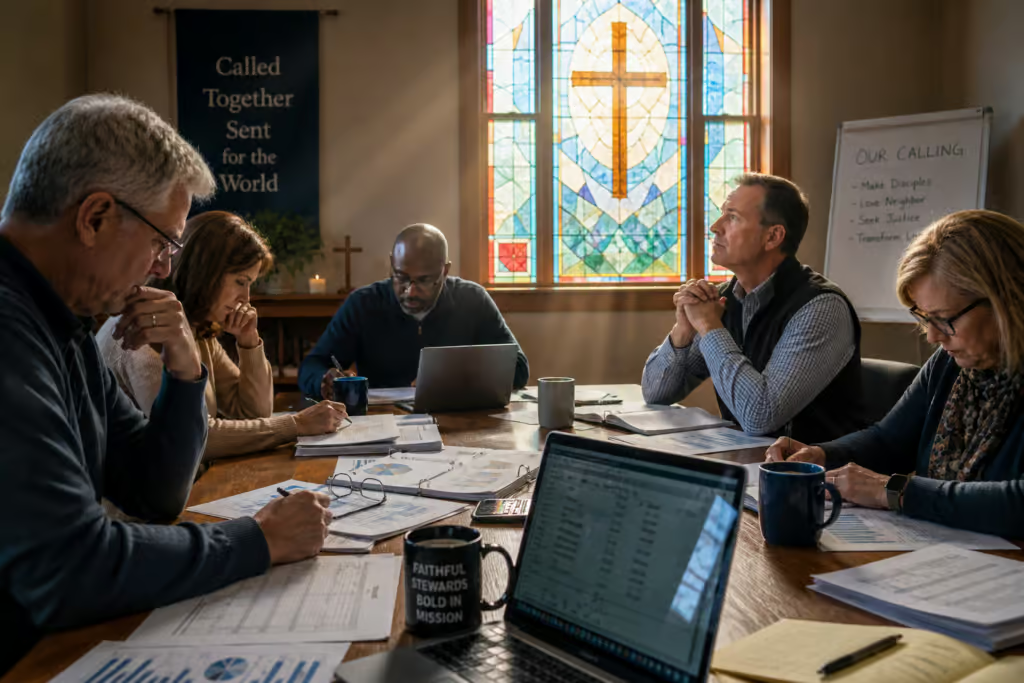
The finance committee sits around a long table covered in spreadsheets. The numbers are not catastrophic. There is no crisis. But giving has softened slightly. Expenses have risen in predictable ways. The draft budget shows a modest shortfall.
The room grows careful.
“We need to tighten things,” someone says gently. “We can’t approve a deficit.”
Heads nod. The language of responsibility fills the air: sustainability, prudence, stability.
No one is being reckless. No one is indifferent to stewardship. These are thoughtful leaders who love their church.
And yet, almost imperceptibly, the question shifts.
Instead of asking, What is God calling us to invest in next?
They begin asking, What must we cut to make this balance?
That shift feels responsible.
But sometimes, it is the wrong choice.
The Bottom Line Is Calling
In business, the bottom line is profit. In nonprofit management, it is sustainability. But in the church, the bottom line is neither surplus nor stability.
The bottom line is calling.
A budget in the life of a congregation is not merely a financial document. It is a theological statement. It declares what we believe God is asking of us in this season.
When we begin with the assumption that the budget must balance before it can be faithful, we subtly reorder our priorities. Financial equilibrium becomes the non-negotiable. Mission becomes adjustable.
We rarely notice the shift.
But it changes everything.
Balancing the budget is a tool.
Calling is the anchor.
When the tool becomes the anchor, discernment narrows.
When Prudence Becomes Fear
There is a difference between prudence and fear.
Prudence asks:
Are we stewarding wisely?
Are we sustainable?
Have we considered timing and cash flow?
Fear asks:
What if it doesn’t work?
What if giving drops further?
What if we regret this?
Prudence keeps a church attentive.
Fear keeps a church small.
Scarcity mindset does not announce itself dramatically. It whispers. It sounds reasonable. It often wears the language of responsibility.
“We just need to be cautious.”
“This isn’t the year to expand.”
“Let’s wait until things feel more secure.”
And waiting can become a habit.
Over time, the congregation stops imagining forward. Vision contracts. Risk tolerance diminishes. Innovation slows—not because the Spirit has grown quiet, but because anxiety has grown loud.
The Rainy Day That Never Comes
Many churches carry reserve funds. This is wise. Emergencies happen. Buildings fail. Economic shifts occur.
But there is a peculiar pattern in congregational life.
It never seems to rain hard enough.
Reserve funds remain untouched year after year—even when ministry opportunities arise. Even when strategic investment could strengthen the future. Even when thoughtful, time-bound deficits could catalyze renewal.
The reserve becomes sacred.
Not because it serves mission.
But because it reduces anxiety.
The question is not whether reserves are appropriate. They often are.
The deeper question is this:
Is the reserve serving the calling—or is the calling being shaped by the reserve?
When security becomes the primary lens, discernment becomes constrained.
The Building Question We Avoid
Few line items carry more emotional weight than facilities.
Heating, cooling, insurance, roof repairs, deferred maintenance—these are real responsibilities. A building is not trivial. It shelters worship, formation, community life.
But buildings also tell stories.
In some churches, an overwhelming percentage of the budget flows toward maintenance. The structure becomes the largest “ministry” the church funds.
Rarely does a board pause to ask:
Does this building still serve our calling?
Or are we serving it?
Balancing the budget by trimming outreach while preserving every inch of square footage may feel prudent. But it can quietly signal that preservation outranks mission.
When contraction is easier than courage, scarcity has taken root.
When Balance Becomes the Idol
No one intends to idolize a balanced budget.
And yet, in some churches, approving a deficit—however strategic, however temporary—feels morally suspect. As though imbalance itself were unfaithful.
But Scripture is not allergic to seasons of imbalance.
Joseph stores grain in abundance for a coming famine. The early church shares resources radically, redistributing wealth for mission. Paul organizes collections to support congregations in need.
Faithful stewardship has always involved discernment, not rigid symmetry.
There are seasons to contract.
And there are seasons to invest.
When leaders treat balance as inherently righteous, they remove the possibility that God may be inviting boldness.
Scarcity and the Loss of Imagination
Scarcity mindset does more than limit spending.
It limits imagination.
When financial conversation begins with “What can we afford?” rather than “What are we called to become?” the range of possible futures narrows.
Leaders begin adjusting vision to match current giving rather than inviting giving to rise toward vision.
Over time, this shapes congregational psychology.
People sense caution. They sense contraction. They sense survival mode.
And survival mode is not fertile soil for generosity.
Generosity grows where there is purpose.
Participation increases where there is clarity.
Giving strengthens where people see courage aligned with calling.
This Is Not Carelessness
Let us be clear.
This is not an invitation to recklessness.
It is not permission for unmanaged deficits.
It is not dismissal of fiduciary responsibility.
Cash flow matters. Timing matters. Sustainability matters.
But sustainability is not the same as stagnation.
Discernment requires asking:
Is this deficit strategic?
Is it time-bound?
Does it advance calling?
Is there a plan for communication and trust-building?
A church may faithfully choose to balance the budget.
But it must never do so automatically.
The question is not, “Does it balance?”
The question is, “Does it align?”
Beginning with Calling
What would happen if every budgeting conversation began not with spreadsheets—but with prayerful discernment?
Before numbers are adjusted, leaders might ask:
What is God inviting us into in this season?
Where is there energy?
Where is there fruit?
What would faithfulness require—even if it stretches us?
Only then do the numbers take their proper place.
The budget becomes an instrument of calling, not a constraint upon it.
This reordering does something subtle but powerful.
It restores courage.
The Energy of Trust
When a congregation senses that leaders are courageously aligning resources with mission—not shrinking in fear—trust deepens.
The direction is clear.
People respond to meaning more than margin.
They give to vision.
They participate in purpose.
They invest in what feels alive.
Scarcity, by contrast, creates emotional contraction. Leaders grow cautious. Communication becomes defensive. Decisions feel reactive rather than inspired.
Balancing the budget may quiet anxiety in the short term.
But courageous alignment strengthens the church in the long term.
A Different Set of Questions
At your next budget conversation, consider asking:
If fear were not driving us, what would we propose?
If we trusted provision, what might we attempt?
What are we protecting—and why?
Is this contraction about sustainability—or about safety?
What story will this budget tell about who we are becoming?
A Closing Invitation
There will be seasons when balancing the budget is exactly the right choice.
And there will be seasons when it is not.
The wisdom lies in discernment—not reflex.
The church’s bottom line is not surplus.
It is calling.
And sometimes, faithfulness requires investing in the future rather than preserving the present.
Not carelessly.
Not arrogantly.
But courageously.
Because the rain may never feel heavy enough.
And the Spirit may be inviting you to step forward—before the numbers feel perfectly safe.