
Most Churches Are Led by Devoted People
Most churches are led by people of sincere devotion. They love their congregation. They care about the mission. They show up consistently. They pray before meetings. They are faithful. And yet, many congregations led by deeply faithful people still experience recurring strain. Meetings feel heavy. The same tensions surface repeatedly. Financial discussions oscillate between caution and urgency. Pastors carry more than they should. Influence quietly concentrates in familiar voices. Nothing dramatic is broken. But the system feels fragile. Because faithfulness alone does not sustain a congregation. Formation does.
The Difference Between Devotion and Development
Good intentions do not automatically produce clear governance, healthy financial interpretation, accountable influence, courageous discernment, or a sustainable emotional climate. These capacities must be cultivated. Without intentional formation, even the most devoted leaders default to instinct. And instinct is shaped by personality, history, anxiety, and past experience more than shared calling. When instinct governs, systems drift. Not because leaders lack faith. But because they lack formation.
A Familiar Scene
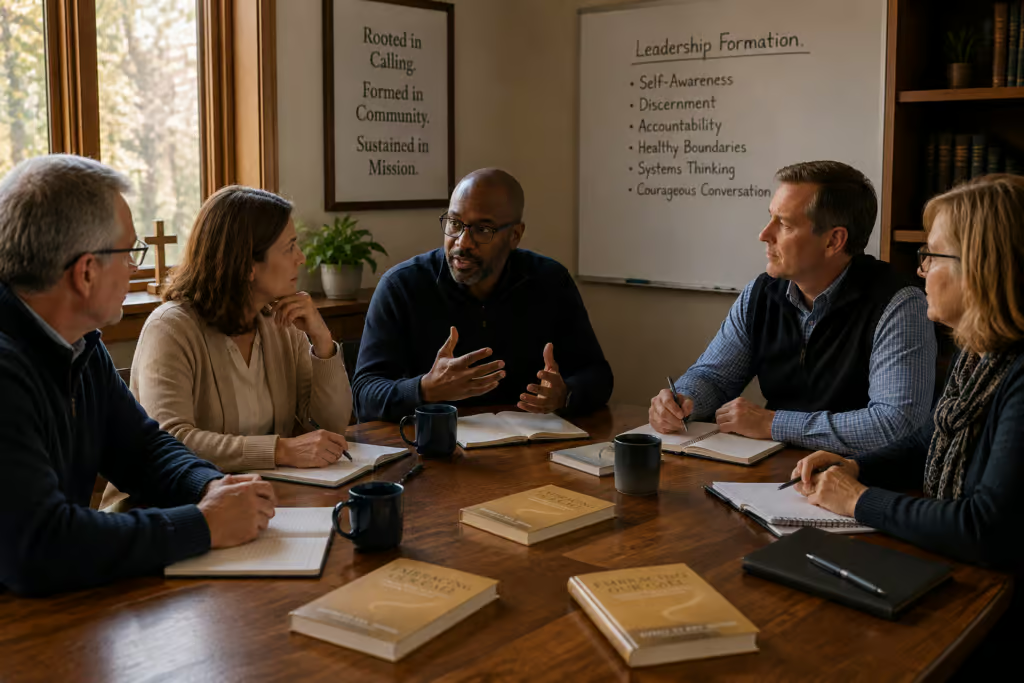
The board gathers after a long season of strain. Nothing dramatic has happened. No scandal. No rupture. Just fatigue. The agenda is manageable. The numbers are stable. The ministries are functioning. And yet, the same conversations resurface. A budget line is questioned again—not because it is unclear, but because anxiety lingers. A proposal stalls—not because it lacks merit, but because no one wants to risk tension. The pastor explains a decision twice—carefully—so that no one feels bypassed. Everyone in the room is faithful. But no one has been intentionally formed in how to separate preference from calling, engage disagreement constructively, interpret financial data without fear, or hold authority with clarity and humility. By the end of the meeting, nothing is visibly wrong. But nothing feels lighter either. This is not a crisis of devotion. It is a gap in formation.
Systems Reflect the Maturity of Their Leaders
Congregational systems do not fail randomly. They mirror the development level of the leaders guiding them. If leaders are conflict-avoidant, governance becomes vague. If leaders are anxious, budgeting becomes fear-driven. If leaders are reactive, urgency dominates. If leaders are unaccustomed to accountability, influence goes unchecked. Over time, these patterns become normalized. The church begins to assume, “This is just how we operate.” But what feels normal may simply be unexamined. Formation interrupts autopilot.
Why Faithfulness Alone Is Not Enough
Faithfulness ensures presence. Formation ensures capacity. A faithful leader will show up to the meeting. A formed leader will ask better questions inside it. A faithful treasurer will guard the numbers carefully. A formed treasurer will interpret those numbers in light of calling. A faithful board member will defend the church’s traditions. A formed board member will discern which traditions serve mission—and which quietly constrain it. Formation deepens awareness. It strengthens self-regulation. It clarifies authority. It builds resilience. And resilience protects systems.
The Hidden Cost of Unformed Leadership
When leaders are sincere but unformed, several predictable patterns emerge. Pastors overfunction because lay leaders have not been formed to share authority and responsibility with clarity. Governance becomes reactive because leaders have not practiced long-range discernment together. Financial conversations become rigid or anxious because leaders lack shared formation around interpretation and mission alignment. Strong personalities quietly dominate because the system has not been intentionally shaped to balance influence with accountability. None of these patterns arise from malice. They arise from lack of formation.
Formation Is a Discipline, Not an Event
Many churches assume leadership formation happens automatically through tenure. “If someone has served for years, they must be formed.” Experience matters. But experience without reflection often reinforces habits rather than deepens wisdom. Formation requires structured reflection, shared learning, honest feedback, theological grounding, and practical application. It is a discipline practiced in community over time. And it protects the system.
Protecting the System Protects the Mission
When leaders are intentionally formed, the entire congregational ecosystem strengthens. Governance becomes clearer. Trust stabilizes. Financial conversations become less reactive. Influence becomes accountable. Urgency softens. The church gains emotional and structural resilience. And resilience allows mission to flourish. Sustainable ministry is not sustained by energy alone. It is sustained by leaders who know how to regulate their reactions, separate personal preference from calling, engage disagreement constructively, interpret data without fear, and make decisions within clear authority. These are learned capacities.
The Myth of “We Don’t Have Time”
One of the most common objections to intentional leadership formation is time. “We are already stretched.” “We can’t add another commitment.” “We just need to get through this season.” But seasons rarely slow down on their own. Without formation, the pace continues and the strain compounds. Formation does not add weight. It redistributes it. When leaders grow in shared capacity, meetings shorten. Decisions clarify. Emotional strain decreases. Energy returns. Formation feels like an investment because it is one. But it is an investment in sustainability.
Moving from Faithful Effort to Intentional Formation
Imagine a leadership team that shares a common language around calling, understands governance boundaries, practices transparent financial interpretation, names influence dynamics without defensiveness, and engages conflict as discernment rather than threat. That kind of culture does not emerge accidentally. It is cultivated. And cultivation requires structure. For many churches, that structure is best developed in community—with other leaders who are asking the same questions and practicing the same disciplines. Intentional cohort environments allow leaders to slow down, reflect, and develop shared capacity—not just individual insight. Formation becomes communal. And communal formation strengthens systems.
A Gentle Invitation
Sustainable ministry requires more than devotion. It requires development. If your leadership team senses that goodwill alone is no longer enough—if meetings feel heavier than they should, if strain keeps resurfacing, if systems feel fragile—it may not be a crisis of faith. It may be an invitation to formation. Church Training Center offers structured Leadership Formation and Cohort Training designed specifically for churches seeking to strengthen governance, financial clarity, and discernment culture.
Learn more about Cohort Training at https://churchtrainingcenter.com/cohort-training/
and Church Leadership Programs at https://churchtrainingcenter.com/church-leadership-programs/.
Or, if you would like to explore what formation could look like in your context, Schedule a Consultation. Because sustainable ministry is not sustained by faithful effort alone. It is sustained by formed leaders who know how to protect the system that carries the calling.