Discernment

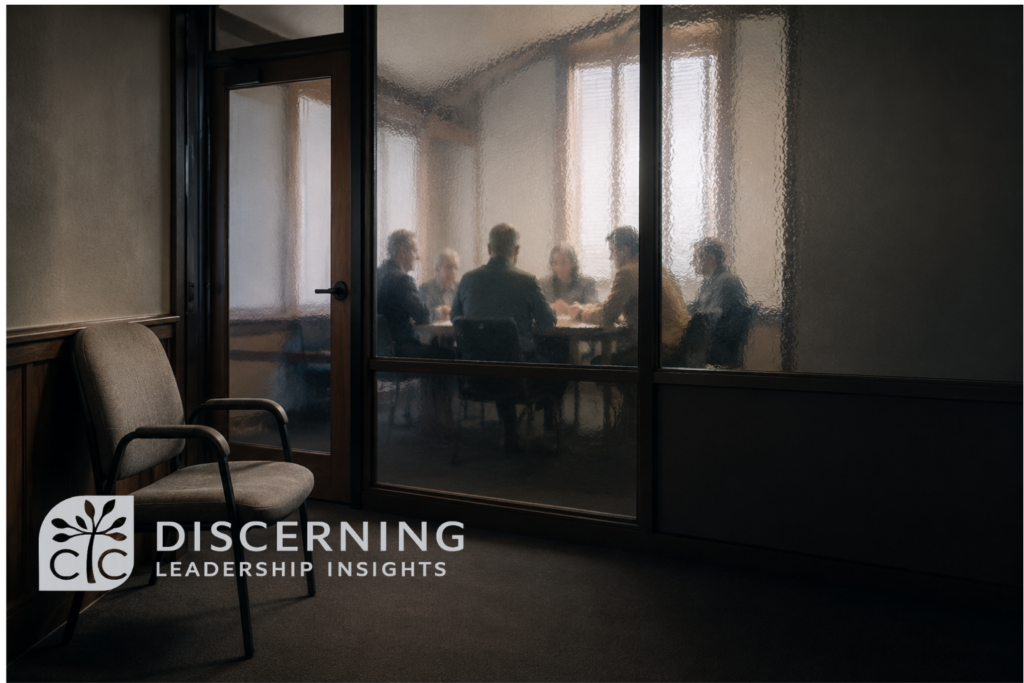
Church leaders meet behind glass doors late at night, reflecting the emotional weight of governance, accountability, and difficult organizational conversations.

When Churches Forget They Are Also Employers

Most churches do not think of themselves primarily as workplaces. They think of themselves as spiritual communities, covenant relationships, ministries, and families of faith. In many ways, that instinct is understandable and deeply important. Churches often resist thinking of themselves as organizations. Yet every church functions through systems of authority, employment, accountability, communication, and governance […]

When Churches Forget They Are Also Employers Read More »

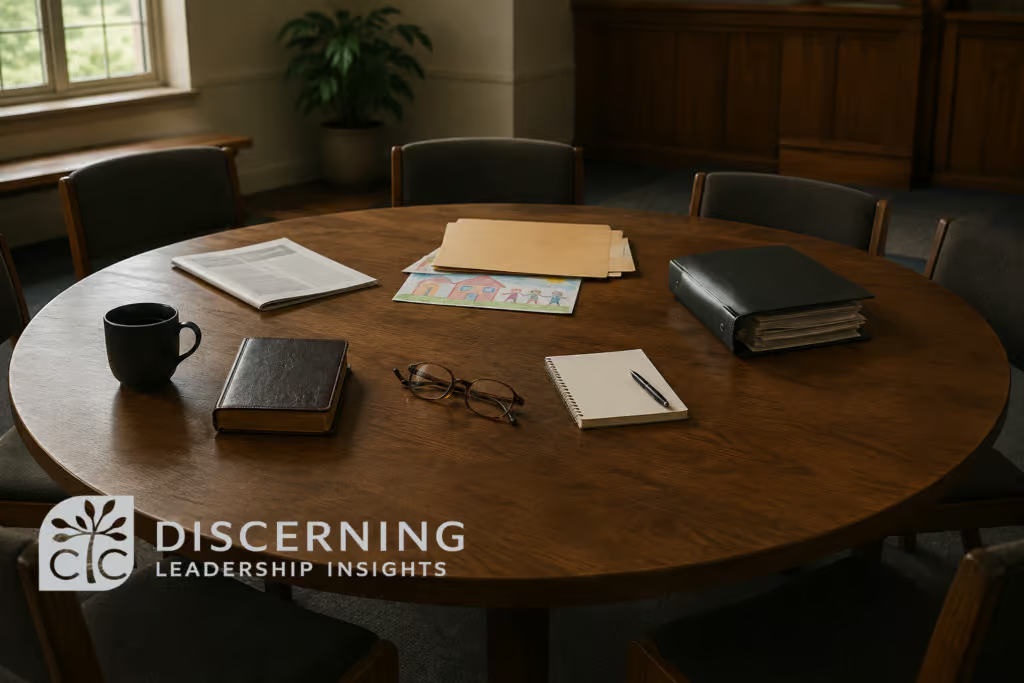
A dimly lit church board meeting at dusk, with leaders seated around a wooden table covered in papers, notebooks, and coffee mugs. The group appears thoughtful and uncertain as they sit quietly in reflection during a difficult conversation. Warm interior light contrasts with the cool blue evening visible through large windows behind them, creating a contemplative and emotionally heavy atmosphere.

Why Discernment Rarely Feels Certain

“I just wish we had more clarity.” The sentence settled quietly into the room, and several people nodded in agreement. The governing board had spent most of the evening discussing staffing concerns, financial pressure, and the growing realization that some long-standing patterns in the congregation could not continue indefinitely. No one had raised their voice.

Why Discernment Rarely Feels Certain Read More »

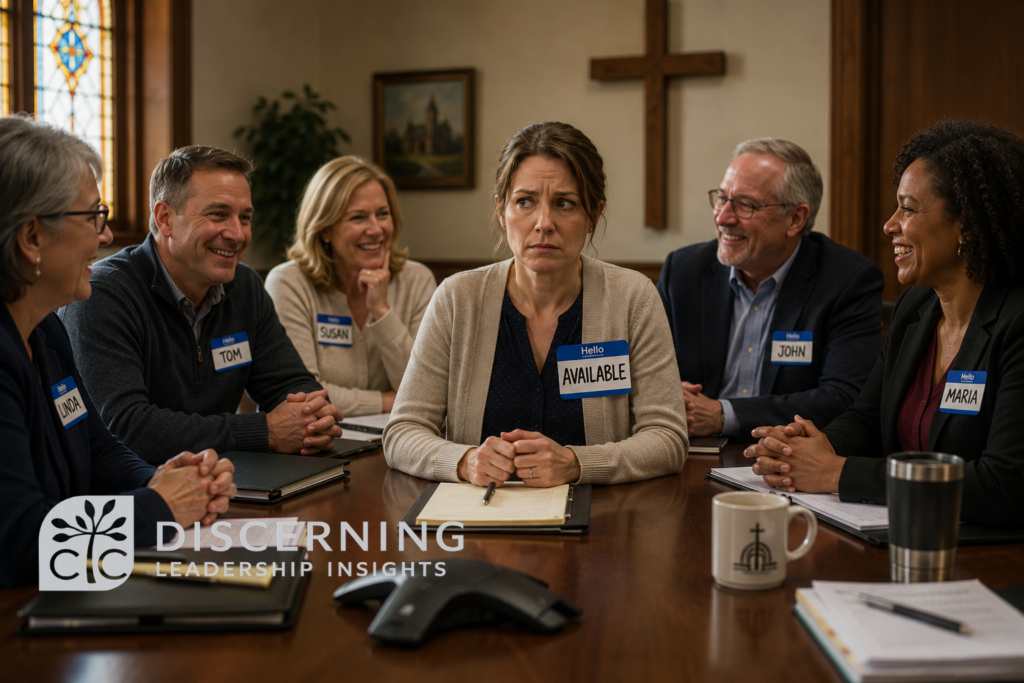
A church board member hesitates before speaking during a quiet leadership meeting at sunset.

The Emotional Cost of Speaking Honestly

Imagine yourself sitting in the usual church board meeting. The agenda is moving forward smoothly. The conversation feels constructive. People are discussing a new direction the board is considering. Heads nod gently around the table. The momentum of the conversation slowly begins carrying the room toward agreement. Yet inside, you feel tension. Something about the

The Emotional Cost of Speaking Honestly Read More »

A pastor braces against a leaning tree with exposed roots along an eroded riverbank at sunset, symbolizing the hidden weight clergy often carry within fragile governance systems.

The Weight Pastors Carry in Undeveloped Governance Systems

In many churches, the pastor becomes the person responsible for holding the spiritual center of the community together. This responsibility is rarely stated directly. It emerges slowly through the life of the congregation. The pastor notices the tension rising in the board meeting and gently reframes the conversation. The pastor senses when fear is shaping

The Weight Pastors Carry in Undeveloped Governance Systems Read More »

A quiet woodland pool at dusk with soft ripples spreading across still water after a single leaf touches the surface. Tall grasses and tree roots surround the pool as warm evening light reflects through the forest, creating a contemplative atmosphere of hidden movement beneath apparent calm.

What Calmness Sometimes Conceals in Church Board Meetings

There are moments in church leadership when a room becomes very quiet after someone speaks. A treasurer names the pace of financial decline more plainly than usual. A pastor admits exhaustion. A board member asks whether a long-held ministry still carries life within it. Someone wonders aloud whether the congregation has confused activity with calling.

What Calmness Sometimes Conceals in Church Board Meetings Read More »

Church through rippled glass panes

When Governance Shapes What the Church Hears

Most churches assume their governance structures are neutral. We inherit bylaws, committees, voting procedures, and reporting lines, and we tend to view them as administrative necessities rather than spiritual influences. Yet over time I have come to believe that governance quietly shapes what a church is able to hear. Structure does not simply organize decision-making;

When Governance Shapes What the Church Hears Read More »

**Alt Text:** A wide wooden church boardroom table with a gavel and an open binder labeled “Policies” in the foreground. Empty chairs line the table, and a large mirror on the wall reflects the vacant seats, suggesting governance and self-examination in a quiet, softly lit meeting room.

Who Holds the Board Accountable?

In most congregational systems, ministers serve within defined accountability structures. They hold credentials. They agree to ethical standards. If concerns arise, there are pathways for review. Regional committees can examine conduct. Standing can be suspended or withdrawn. Boards operate in a different category. Elders, trustees, deacons, and council members often hold final authority in the

Who Holds the Board Accountable? Read More »