
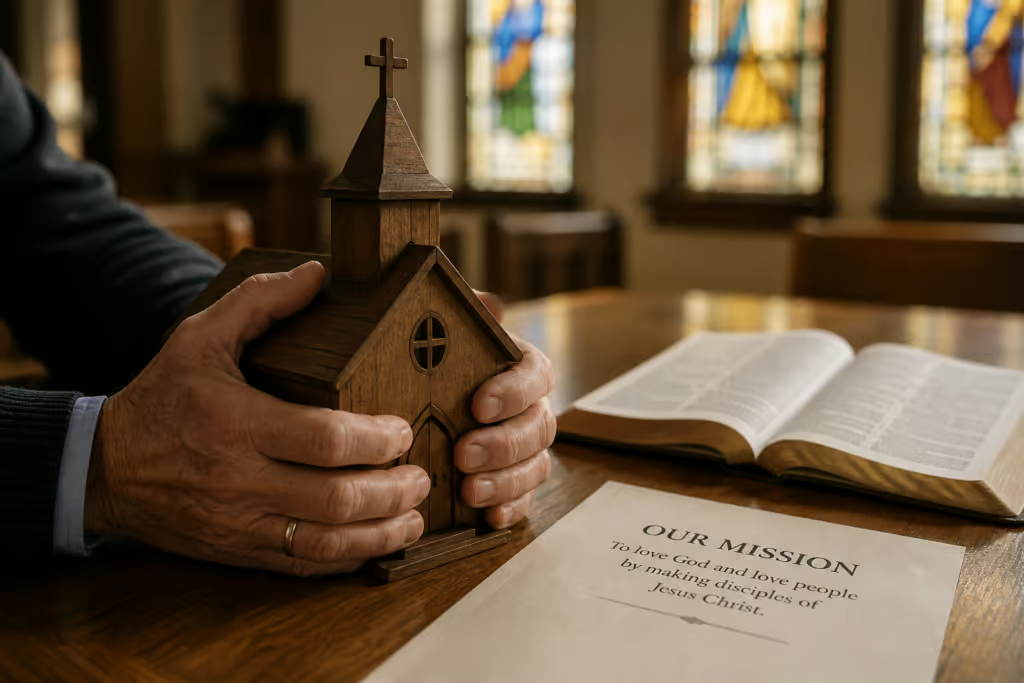
Church boards are entrusted with sacred responsibility.
They guard mission.
They steward resources.
They protect continuity across seasons of leadership.
They ensure accountability.
Governance in a congregation is spiritual work.
But something subtle can happen over time.
Oversight can begin to feel like ownership.
No one intends this shift. It does not arrive with a vote. It rarely begins with control. More often, it begins with care.
Long-serving leaders love the church. They have weathered transitions, protected stability, and carried responsibility through uncertain seasons. They remember hard chapters. They remember near losses. They remember what it cost to rebuild trust.
And slowly, without noticing, stewardship begins to feel like possession.
The Difference Between Stewardship and Ownership
Stewardship holds something on behalf of a greater Calling.
Ownership protects something as if it belongs to us.
The difference is subtle but profound.
A steward asks, “What is this church being called to become in this season?”
An owner asks, “How do we protect what we have built?”
A steward releases control when discernment leads elsewhere.
An owner resists change that feels unfamiliar.
A steward sees governance as guardianship of mission.
An owner sees governance as management of assets.
Again, no one declares this shift. It emerges atmospherically. It is shaped by fear, memory, fatigue, or financial strain. It is often intensified when a congregation has experienced instability.
When anxiety increases, ownership feels safer than stewardship.
How Ownership Quietly Appears
Boards rarely say, “We own this church.”
Instead, ownership reveals itself in posture.
Decisions are shaped before conversations begin.
Information is curated to influence outcomes.
Pastoral vision is filtered through approval rather than discernment.
Longevity is equated with authority.
New voices are tolerated but not truly heard.
The language shifts subtly.
“Our church” becomes territorial rather than communal.
“We’ve always done it this way” becomes a shield rather than memory.
“Protecting the church” becomes justification for narrowing imagination.
Meetings may remain orderly. Motions are still made. Votes are still counted. Governance still functions.
But the spirit beneath it changes.
Oversight becomes control.
And control reshapes trust.
The Cost to the Pastor
Pastors feel this shift almost immediately.
When oversight becomes ownership, pastoral leadership narrows. Vision must be defended rather than explored. Innovation feels like threat rather than possibility. Partnership becomes performance.
The pastor begins sensing that approval, not alignment, is the true threshold.
Over time, this dynamic creates quiet erosion. Not always open conflict. Not always visible fracture. But energy shifts. Courage softens. Trust becomes conditional.
Pastors may not leave immediately. But they begin leading more cautiously. And cautious leadership rarely produces vibrant mission.
The Cost to the Board
Ownership burdens boards as well.
When leaders feel responsible for protecting “their” church, anxiety increases. Decisions feel heavier. Risk feels dangerous. Every change carries emotional weight.
Control requires vigilance. Vigilance requires energy. And energy drains when trust is thin.
What began as protective care slowly becomes exhausting responsibility.
Returning to Sacred Oversight
Healthy governance is not passive. It requires courage, clarity, and accountability.
But sacred oversight asks different questions:
Are we guarding mission — or guarding comfort?
Are we protecting Calling — or protecting familiarity?
Are we holding this church in trust — or holding it tightly?
Oversight is strongest when it is rooted in humility. When boards remember that the church does not belong to them, but has been entrusted to them for a season.
Seasons change. Leaders change. Context changes.
Calling remains.
Practices That Restore Stewardship
If a board senses tightening posture, the solution is not accusation. It is reorientation.
Begin by naming the distinction between stewardship and ownership.
Revisit the congregation’s discerned Calling together. Read it aloud before meetings. Allow silence to follow. Ask not what preserves stability, but what preserves alignment.
Clarify roles. Oversight does not require controlling vision. Governance does not require suppressing pastoral initiative. Distinct roles, clearly honored, restore harmony.
Invite reflection:
Where might we be holding too tightly?
What decisions feel driven by fear rather than discernment?
How can we strengthen trust without loosening accountability?
These are not easy questions. But they are faithful ones.
A Church Is Never Owned
The church is not an asset to be managed. It is a living body to be guided.
Boards are not proprietors. They are guardians. Their authority is real, but it is received — not possessed.
When oversight is rooted in Calling, governance becomes lighter. Trust steadies. Pastors lead more freely. Innovation feels possible. Energy returns.
When ownership loosens its grip, stewardship strengthens its voice.
And when stewardship guides governance, the church becomes free again — not to protect what was, but to become what it is being called to be.