
Church Finance Insights

Church Finance Insights

Three church leaders reviewing financial documents and a laptop together at a table in a warm church office.

Small Church Financial Controls: What to Do When You Cannot Fully Segregate Duties

A small church may have one volunteer who understands the accounting software, knows how to pay the bills, prepares the financial reports, and reconciles the bank account. Another person may count offerings, while the pastor or board approves larger expenditures. Everyone involved may be trustworthy and conscientious. There simply are not enough financially capable people

Small Church Financial Controls: What to Do When You Cannot Fully Segregate Duties Read More »

Church administrator reviewing clergy payroll documents at a desk, with separate employee payroll and housing allowance materials visible.

What Makes Minister Payroll Different from Ordinary Employee Payroll?

A church calls a new minister and adds the person to payroll. The payroll system asks whether the minister is an employee, and the church correctly answers yes. From there, the software may try to apply the same settings it uses for the administrator, custodian, or other employees: Social Security and Medicare withholding, ordinary federal

What Makes Minister Payroll Different from Ordinary Employee Payroll? Read More »

Church treasurer reviewing financial reports at a wooden table, with operating documents and special-purpose financial records kept visibly separate.

Church Cash Management: Protecting Restricted and Designated Funds from Operating Use

Suppose a church’s primary checking account shows $150,000 on a Wednesday morning. Payroll will run Friday, an unexpected repair needs approval, and the latest month-end fund report is nearly three weeks old. Of the cash reported at the last close, $75,000 was associated with donor-restricted purposes and another $25,000 had been set aside by the

Church Cash Management: Protecting Restricted and Designated Funds from Operating Use Read More »

Open church budget and financial reports on a wooden table in a warmly lit church meeting space, with a calculator and planning notes nearby.

Budgeting for the Bottom Line in Ministry: A Mission Plan, Not a Rule Book

A church can spend months developing a budget. Ministry teams submit requests. Staff estimate expenses. Giving and other income are projected. The finance committee works through the numbers, and eventually the appropriate body approves the plan. Then, a few months later, someone proposes something that was not anticipated. “It isn’t in the budget.” That statement

Budgeting for the Bottom Line in Ministry: A Mission Plan, Not a Rule Book Read More »

Church finance workspace with bank statements, reconciliation and review documents, calculator, pen, glasses, and warm natural light.

Who Should Reconcile the Church Bank Account—and Who Should Review It?

A church may have a capable treasurer, bookkeeper, administrator, or volunteer who keeps the accounting records and prepares the bank reconciliation. The question is not whether one particular church office is supposed to do the reconciliation. The more important question is whether the way the work is divided gives one person too much control over

Who Should Reconcile the Church Bank Account—and Who Should Review It? Read More »

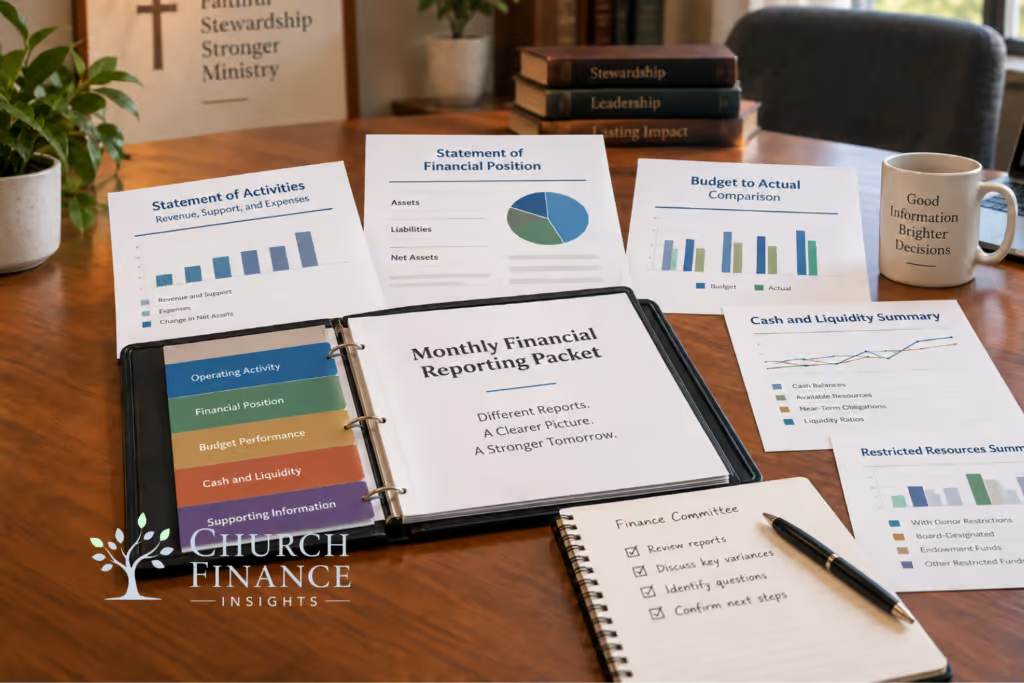
What Financial Reports Should a Church Finance Committee Receive Each Month?

Most finance committees inherit their monthly financial packet rather than design it. A treasurer or bookkeeper prints the reports that have always been printed, adds a bank balance or budget comparison, and sends the packet to the committee. The reports may all be useful. The harder question is whether, taken together, they answer the financial

What Financial Reports Should a Church Finance Committee Receive Each Month? Read More »

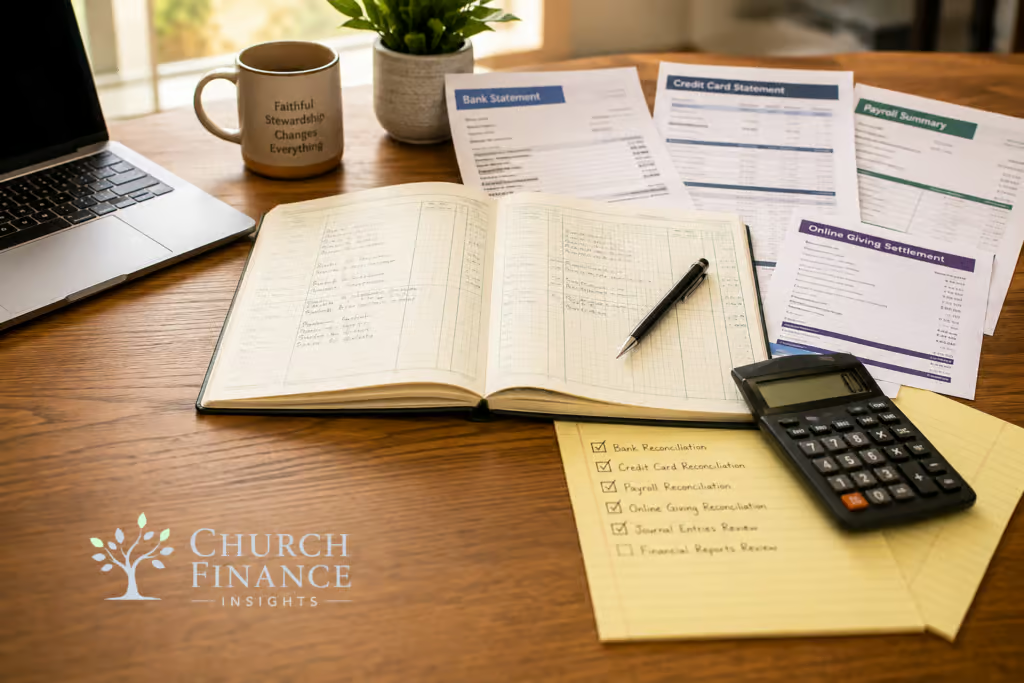
Month-end reports on a table.

What Belongs in a Church Month-End Close?

The bookkeeper has entered the month’s deposits, bills, checks, electronic payments, and payroll. The accounting software can generate a statement of activities and a statement of financial position, so the reports appear ready for the finance committee. A few things remain unfinished. The bank account has not been reconciled. One online-giving deposit does not match

What Belongs in a Church Month-End Close? Read More »

Church office desk with a Building Fund financial folder, board minutes, resolution, donor records, and campaign materials arranged for review.

Restricted or Designated? Why the Difference Matters Before Your Church Spends the Money

The finance committee has $42,000 showing in a Building Fund. A major HVAC replacement is now needed, and someone asks what appears to be a straightforward question: Can the church use the Building Fund to pay for it? The accounting system confirms the balance, but no one currently serving remembers exactly how the fund began.

Restricted or Designated? Why the Difference Matters Before Your Church Spends the Money Read More »

Warm church-office desk with a bank statement, accounting ledger, financial report, and calculator, illustrating that cash is only one part of a church’s financial picture.

Beyond the Bank Balance: What Cash Can—and Cannot—Tell You About Your Church’s Financial Health

What Cash Can—and Cannot—Tell You About Your Church’s Financial Health A church can know exactly how much money is sitting in its checking and savings accounts. That information matters. Leaders need to know whether the church has cash available to pay employees, vendors, utilities, insurance, and the ordinary expenses of ministry. The difficulty begins when

Beyond the Bank Balance: What Cash Can—and Cannot—Tell You About Your Church’s Financial Health Read More »